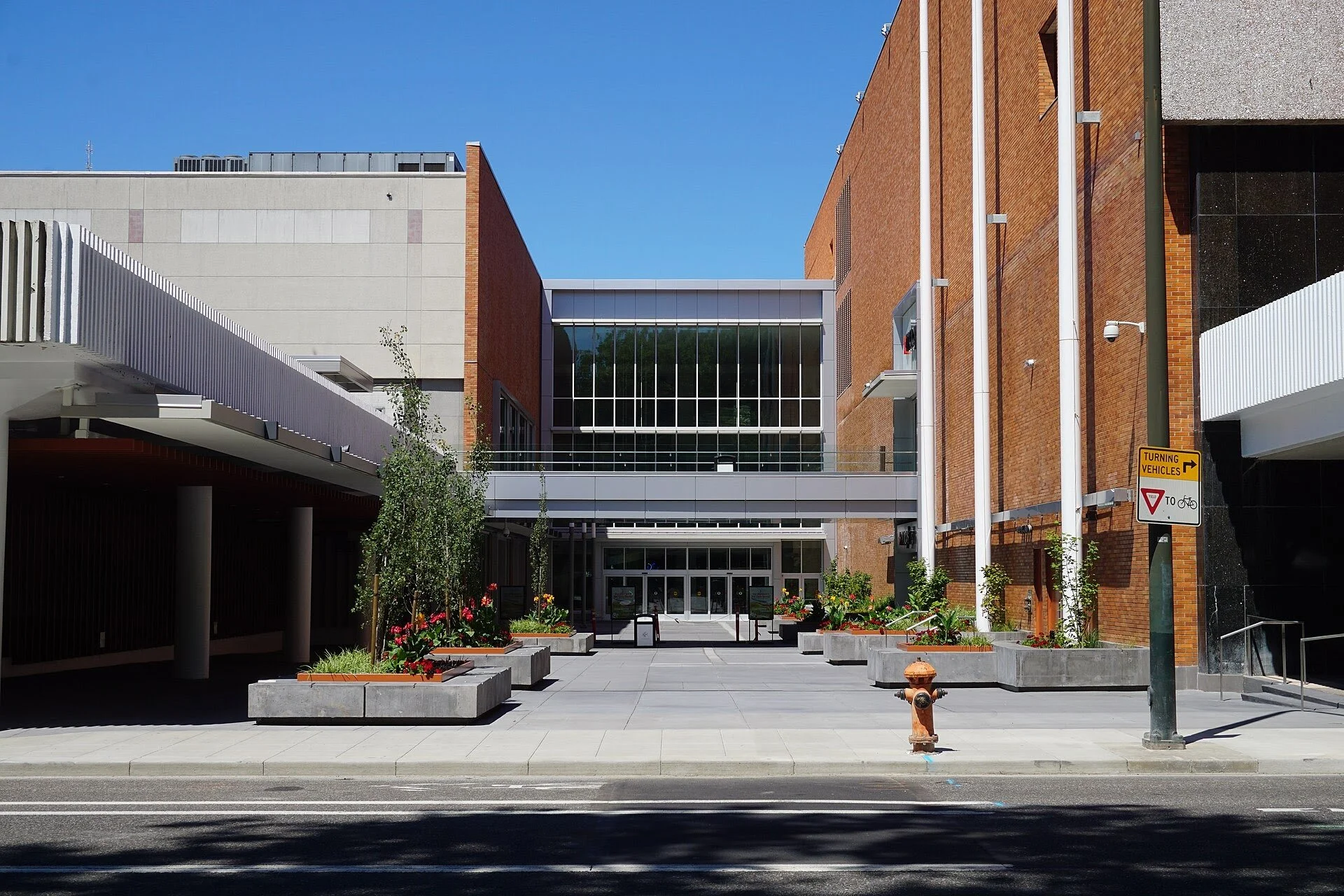
Imagining Alternatives
A better vision for redevelopment of Lloyd Center would retain history and culture while allowing for phased redevelopment of the site. Our community-driven “Hybrid Plan” calls for keeping an integral part of Lloyd Center, including the historic ice rink intact, allowing it to continue serving the community, as it has for over 65 years.
Portland’s Opportunity.
Portland has a once-in-a-lifetime opportunity to do something transformative with Lloyd Center that respects our shared history and celebrates what makes Portland a distinctly vibrant destination.
The current ownership plans to demolish the entire mall to make way for a mixture of housing, unspecified commercial developments, “green space” and new throughways. There are no known buyers or developers signed onto this plan, and even if there were, it would completely overwrite Portland’s history and waste dynamic infrastructure proven to serve many cross-sections of our community and foster an authentic present-day culture.
The “mall renaissance” of 2022-2026-era Lloyd Center proved there are many options for reusing the core of the existing mall. While Lloyd Center now lays dormant, it is in completely serviceable condition and remains a vital investment opportunity for Portland to reinvent a historic shopping center and live its values of creative artistry, environmental leadership, and social innovation.
Our “Hybrid Plan” Concept
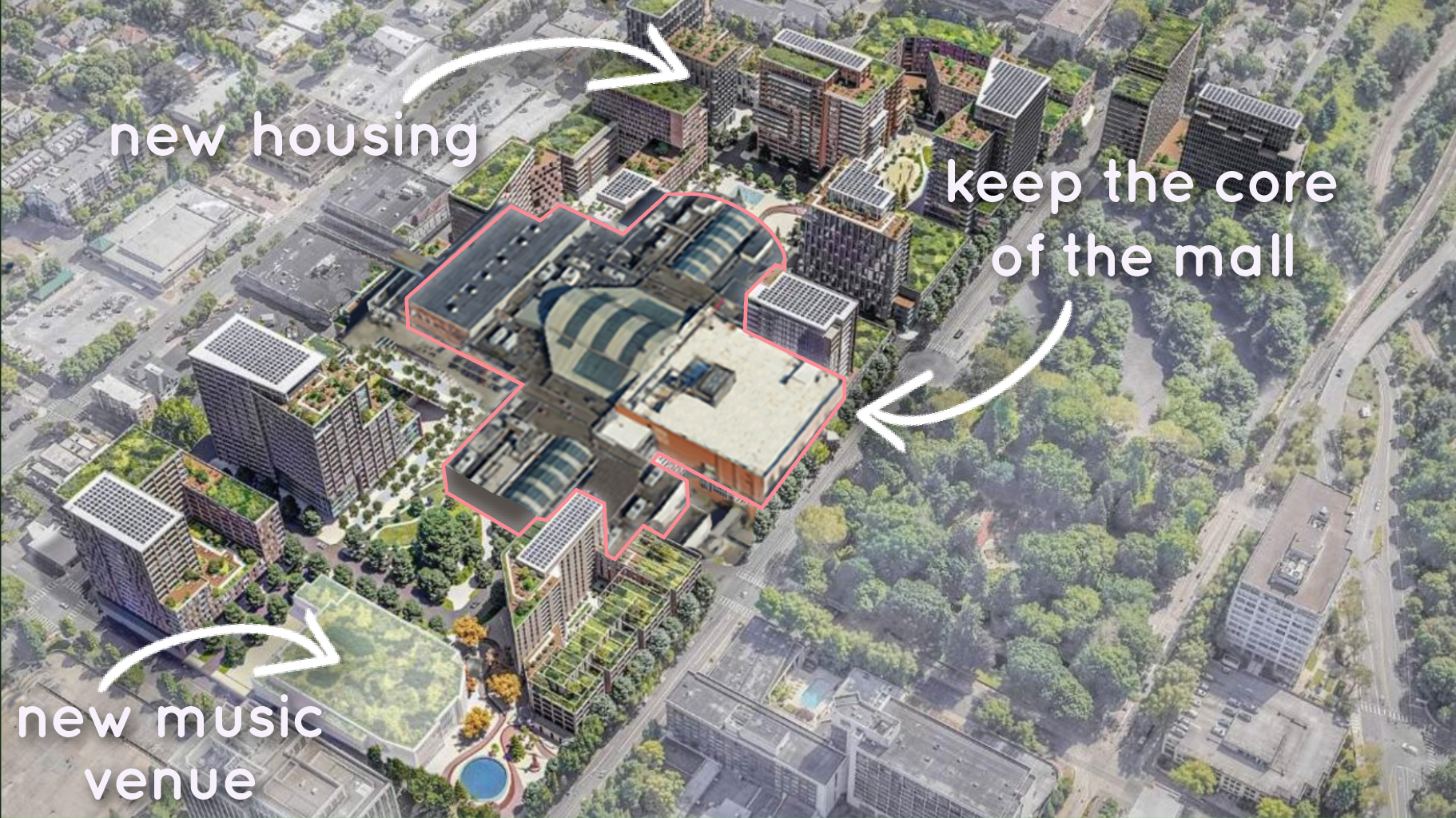
Our proposed “hybrid plan” shows a preserved portion of Lloyd Center, amidst new housing and new music venue—the perfect combination for a revitalized Lloyd District.
Prioritize adaptive reuse. Avoid wasteful demolition.
Our “hybrid plan” prioritizes adaptive reuse of present day Lloyd Center.
It avoids wasteful demolition and environmental impacts, invests in Portland’s distinctly creative culture, and preserves the integral part of Lloyd Center that remained a community destination up until the mall’s closure to the public on August 8th, 2026.
It is still possible for the city, regional government, philanthropists, and the public to give this long-held community fixture the investment that is deserves, for present and future generations.

Urban Renaissance Group’s Conceptual Site Plan
The conceptual site plan put forth by Urban Renaissance Group (URG) shows plots for 15 new developments on the 29 acre site where Lloyd Center currently sits.
One of the fifteen developments is a concert venue already being constructed in place of the recently demolished Nordstrom building.
It’s important to note that URG’s plan calls for the closure and complete demolition of Lloyd Center. We feel it is a heavy-handed, wasteful, and culturally insensitive approach to revitalizing the Lloyd District.
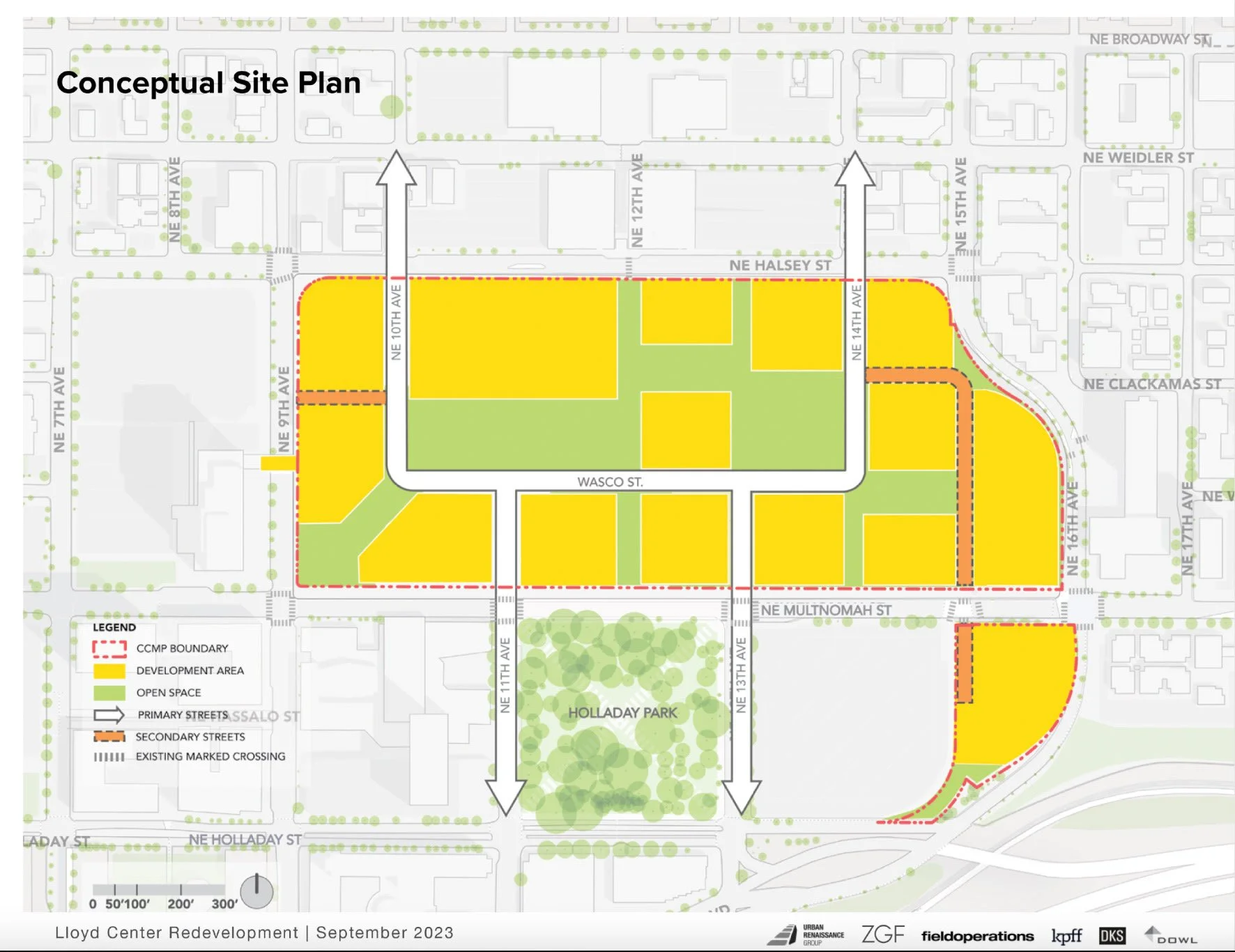
The URG Plan shows new developments in yellow and “hardscaped” open spaces in green. It envisions two new throughways stemming from 11th and 13th Avenue—the two streets on either side of Holladay Park. This continuation of the street grid is one of the selling points of the URG Plan, according to some, as it will make navigating the planned redevelopment easier, and somehow make it less car-centric?
The Alternative Plan benefits all.
Avoids wasteful demolition and environmental impact
Prioritizes adaptive reuse of historic architecture
Respects Lloyd Center as a fixture in Portland’s urban landscape and collective memory
Demonstrates Portland’s creativity and spirit of innovation
Creates an energetic hub of activity to help revitalize Lloyd District, and Portland at large
Sees Portland living its values, setting an example for other cities
Provides a place of refuge during inclement weather or unforeseen circumstances
Draws tourists, positive press, and promotes an affirming image of Portland
Gives Portlanders a climate-controlled place to shop, gather, build community
The alternative plan for the core of Lloyd Center embodies Portland values of creativity, cultural innovation, historic preservation, and environmental leadership.
#savelloyd
Preserve Lloyd Center as a destination into the future! Respect the mall as a fixture of Portland’s urban landscape and collective memory.